
—Education · Conservation · Research
ECORE
The academic engine behind the Center
—What is ECORE?
Where conservation becomes a classroom
ECORE – Education, Conservation & Research – is the academic engine behind everything ECC does. Led by Dr. Anabel Lopez Perez and guided by an international Scientific Committee including Dr. Susan Mikota (Elephant Care International), Dr. Janine L. Brown (Smithsonian Conservation Biology Institute) and senior veterinary advisor Christopher Stremme, ECORE runs four research pillars – from endocrinology and genetics to disease surveillance and rewilding science – with partners including Chiang Mai University, the Smithsonian, and Laos’ own National University. ECORE is why the Center’s work holds up to international scrutiny, and why ECC is the backbone of elephant conservation in Laos.
4 research pillars
Scientific Research, Conservation, Veterinary Care, Education
Academic partners
Smithsonian, Chiang Mai University, National University of Laos, IRD France
Directed by
Dr. Anabel Lopez Perez, PhD, Chiang Mai University, 2025
—Four ways in
One campus for a variety of students
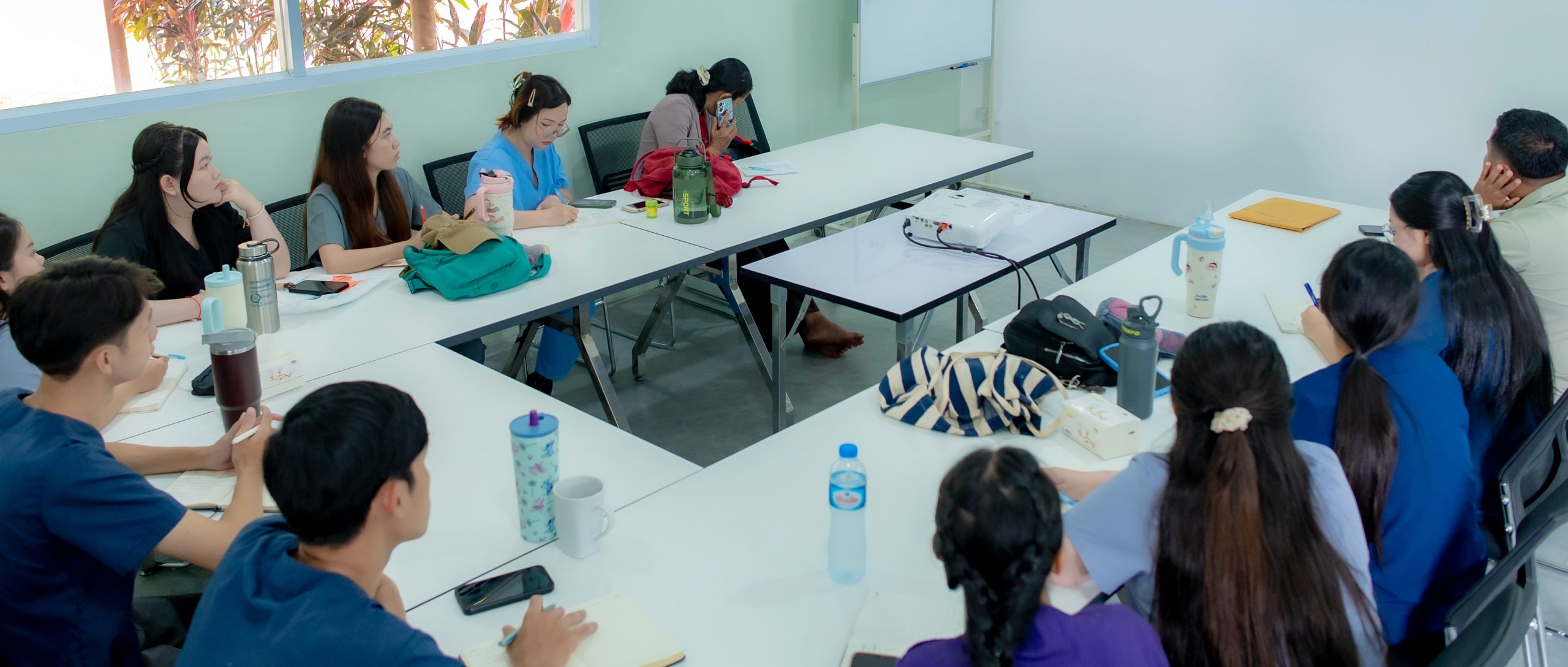
From a single school day to a six-day clinical intensive, the courses share one campus and one team, and serve very different people. Each with its own audience and its own rhythm.
Kids in Conservation
Growing Laos’ next generation of conservationists
Since the earliest days, the Center has brought Sayaboury’s schoolchildren face-to-face with the animal that defines their province, free of charge. Run with the Sayaboury Department of Education, it has reached over 60,000 students – hands-on days at the nursery, the hospital and the exhibition center. Led on-site by the Elephant Manager and the guides.
High School Student Experience
Study abroad
For school groups of up to 16 students: tracking herds through the forest, a meeting with elephant vets, observing the country’s sole male-elephant socialisation programme and understanding how elephants shape their ecosystem thanks to home-made educational material and pedagogical aids. A life-changing experience for junior conservationists.
Research & Long-Term Internship
Real data, real elephants, real contribution
Two tracks. Self-Directed Research puts postgraduate researchers to work in the endocrinology and DNA labs or in their own field of research. The Long-Term Internship immerses students and recent graduates in daily conservation work under the mentorship of the vets, biologists and mahouts. Every project is reviewed against the Research Proposal Guide before it starts.
Veterinary Workshop
Inside Laos’ only elephant hospital
Six-day intensive for 4th and 5th-year veterinary students and recent graduates, taught by Dr. Susan Mikota, Dr. Janine L. Brown, and the Center’s own veterinary team. $150 of every course fee funds training for Lao veterinary students. This intensive course offers both theoretical and practical experience through direct access to the largest herd of elephants under human care.
—WILDMED
A vet clinic that comes to you
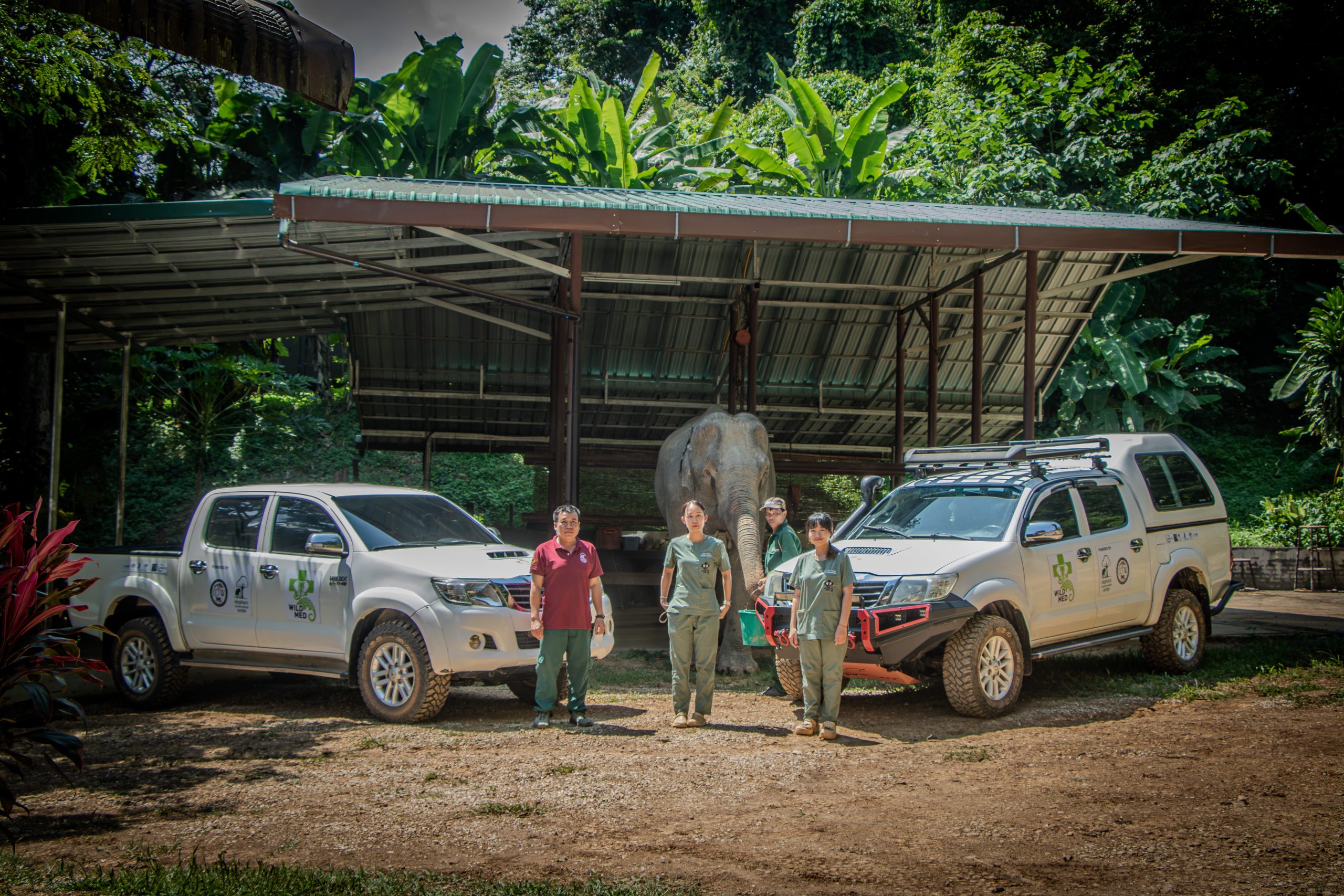
 WILDMED is the Center’s mobile veterinary unit, taking emergency and preventive care beyond the gates – to elephant camps, wild-elephant range, and other wildlife across Laos. Led by Dr. Moukthida Vilasith and coordinated by Dr. Melody Bomon, it runs on a One Health model: treating animals protects the people living alongside them too, and every mission doubles as hands-on training for Lao vets and students.
- Free preventive care for elephant camps; fee-based treatment and emergency response for wild and captive elephants, plus other wildlife
- Partnership with the Lao Conservation Trust for Wildlife (LCTW)
- Funded by IUCN ProBioDev, UK Embassy Vientiane, Wyss Academy for Nature, UNIVET Nature
- Launched in 2025
—The labs
Three labs
Not every conservation site runs its own labs. The Center does – three of them, feeding directly into the hospital, the breeding programme and the rewilding record, rather than sending samples off to a city and waiting weeks for results.
Diagnostic Lab
General clinical work – blood counts, parasitology, basic pathology – set directly in the hospital. Centrifuge, microscopes, a scale, a water bath... The essentials for same-day answers on a sick or injured elephant. Also used for training during the Veterinary Workshop.
Endocrinology Lab
Laos’ first elephant endocrinology lab, opened in 2019, analyses testosterone, cortisol and progesterone from captive and wild elephants – the data that tells the breeding programme when a cow is in oestrus, or a bull is heading into musth.
DNA Lab
Genetic analysis of captive and wild herds – genealogy, genetic diversity, individual identification – including DNA collected in the field from wild elephants in Nam Pouy National Protected Area. The kind of population-level science a single-animal vet clinic can’t do.